
Computer Networking For Beginners
Learn the essentials of computer networking from the ground up. This beginner-friendly course will teach you how computers communicate, how networks are structured, and how the internet works. Gain practical knowledge of network devices, IP addressing, protocols, network security, and troubleshooting skills needed for IT, cybersecurity, and networking careers.
Created by
vSkul Teacher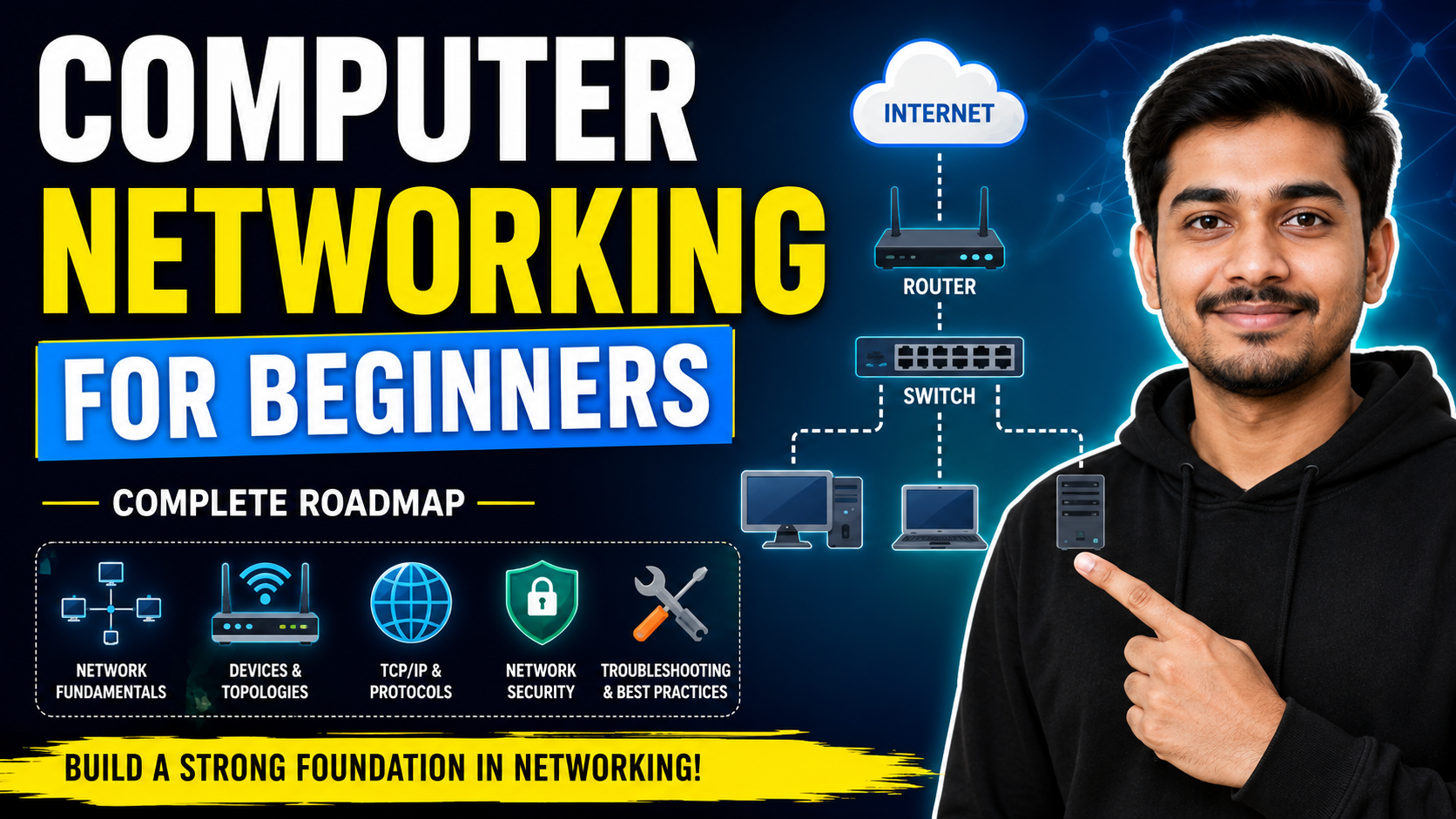
This course includes:
- 📹 6 video lessons
- ⏱ 1h 31m on-demand video
- 📱 Mobile & desktop access
- 🎓 Certificate of completion
- ♾️ Lifetime access
vSkul Teacher
B.Sc Mathematics, M.Ed Educational Technology
Professional teacher with more than 10 years of teaching experience.
Course Curriculum
Network Fundamentals For Beginners - Lesson 1
Welcome to Network Fundamentals for Beginners, an essential lesson designed to introduce you to the world of computer networking.
In this lesson, you will learn what a computer network is, why networks are important in modern technology, and how devices communicate across local and global networks. The session covers the core networking concepts every aspiring IT professional should understand before moving into advanced networking, cybersecurity, cloud computing, or systems administration.
You'll explore different types of networks, network devices, communication methods, and the fundamental principles that power the internet and organizational networks. Whether you're preparing for networking certifications, starting an IT career, or simply curious about how data moves across networks, this lesson provides the perfect starting point.
By the end of this lesson, you'll have a solid understanding of networking fundamentals and be prepared to dive deeper into topics such as IP addressing, routing, switching, network protocols, and network security. The lesson aligns with foundational networking concepts commonly taught in networking education and certification pathways.
Instructor
Kevin Wallace, CCIE #7945 (Networking Fundamentals Series)
Hub, Bridge, Switch, Router - Network Devices - Networking Fundamentals For Beginners - Lesson 2
Understanding network devices is essential for anyone starting a career in networking, cybersecurity, system administration, or IT support.
In this Networking Fundamentals lesson, you'll explore four core network devices: Hub, Bridge, Switch, and Router. You'll learn how each device handles network traffic, where it operates within the OSI model, and why modern networks rely heavily on switches and routers instead of traditional hubs.
The lesson covers how hubs broadcast data to all devices, how bridges segment networks and reduce collisions, how switches intelligently forward frames using MAC addresses, and how routers connect different networks using IP addresses. You'll also gain insight into collision domains, broadcast domains, network segmentation, and efficient packet forwarding.
Whether you're preparing for CompTIA Network+, Cisco CCNA, cybersecurity studies, or simply building a strong networking foundation, this lesson provides practical knowledge that will help you understand how data travels through modern networks.
Instructor
Instructor: Kevin Wallace, CCIE #7945 (Networking Fundamentals Series)
OSI Model: A Practical Perspective - Networking Fundamentals - Lesson 3
Understanding the OSI (Open Systems Interconnection) Model is one of the most important steps in learning computer networking. In this lesson, we move beyond memorization and focus on the practical purpose of each layer and how they work together to move data between devices across a network.
You will learn how networking communication is organized into seven layers, from the Physical Layer that transmits bits to the Application Layer that supports user-facing services. This practical approach helps beginners understand the responsibilities of each layer, troubleshoot network issues, and visualize how data travels across the internet.
Whether you're preparing for networking certifications, cybersecurity training, IT support roles, or simply building a strong technical foundation, this lesson provides the essential knowledge needed to understand modern computer networks. The lesson emphasizes the goals and functions of the OSI Model and its role in real-world networking environments.
Instructor
Instructor: Ed Harmoush
OSI Model: A Practical Perspective2 - Networking Fundamentals - Lesson 4
Understanding the OSI Model is one thing—seeing how it actually works in real network communication is another. In this lesson, OSI Model: A Practical Perspective – Part 2, you'll explore how data moves through each OSI layer as it travels across a network and reaches its destination. This lesson focuses on the practical application of the OSI Model by demonstrating how information is encapsulated, transmitted, and de-encapsulated during network communication.
Through clear explanations and real-world examples, you'll gain a deeper understanding of how networking protocols interact across layers, why each layer is important, and how the OSI model helps network engineers troubleshoot communication problems effectively. The lesson builds upon the foundational concepts introduced in Part 1 and helps bridge the gap between theory and practical networking.
Whether you're preparing for networking certifications such as CCNA, studying computer networking fundamentals, or pursuing a career in IT, this lesson provides essential knowledge that every network professional should understand.
Instructor
Instructor: Practical Networking
Network Protocols For Beginners - Lesson 5
Understanding network protocols is a fundamental skill for anyone pursuing a career in IT, networking, cybersecurity, cloud computing, or systems administration.
In this lesson, you'll gain a practical understanding of how network protocols enable communication between devices, applications, and servers across local and global networks. The lesson explains the purpose and functionality of common protocols used every day on the internet and enterprise networks.
You'll learn how protocols such as ARP resolve network addresses, how HTTP and HTTPS power web communication, how SMTP handles email delivery, how FTP transfers files, and how SSL/TLS secures data in transit. The lesson also introduces TCP/IP concepts and demonstrates how different protocols work together within the networking stack.
Whether you're preparing for networking certifications such as CompTIA Network+, Cisco CCNA, or simply building a strong foundation in computer networking, this lesson provides the knowledge needed to understand how modern networks operate.
Instructor Name
Instructor: Practical Networking Academy (Based on the video source)
How Data Moves Through The Internet - Networking Fundamentals For Beginners - Lesson 6
Have you ever wondered what happens when you open a website, send an email, or stream a video online?
In this Networking Fundamentals lesson, you'll learn the complete journey of data as it travels across the internet. Starting from a user's device, you'll follow data packets through switches, routers, local networks, and the wider internet until they reach their destination. Along the way, you'll discover how IP addressing, packet switching, routing, TCP/IP, and network protocols work together to deliver information reliably and efficiently.
This lesson serves as a capstone to the Networking Fundamentals series, combining concepts such as network devices, the OSI model, routing, switching, and protocols into a practical end-to-end explanation of internet communication. Students will gain a clear understanding of how modern networks function and how data reaches websites, applications, and online services.
Whether you're preparing for networking certifications, starting a career in IT, cybersecurity, cloud computing, or simply curious about how the internet works, this lesson provides the foundational knowledge needed to understand real-world network communication.
Instructor
Instructor: Ed Harmoush
About This Course
Are you interested in understanding how computers, smartphones, servers, and devices communicate across networks and the internet? Computer Networking for Beginners is a comprehensive introductory course designed to help you build a strong foundation in networking concepts without requiring any prior experience.
In this course, you will learn the core principles that power modern computer networks. Starting with networking basics, you will explore different network types, topologies, devices, and communication models. You will gain a clear understanding of IP addressing, subnetting fundamentals, routing, switching, DNS, DHCP, and common networking protocols.
Through practical demonstrations and real-world examples, you will discover how data travels across local networks and the internet. You will also learn essential network security concepts, troubleshooting techniques, and industry best practices used by IT professionals worldwide.
Whether you are a student, aspiring IT professional, system administrator, cybersecurity enthusiast, or someone looking to understand the technology behind today's connected world, this course provides the knowledge and confidence to begin your networking journey.
By the end of the course, you will have a solid understanding of computer networking fundamentals and be prepared for more advanced networking, cloud computing, cybersecurity, and IT infrastructure studies.
Student Reviews
No reviews yet. Be the first to review this course!